Hi!
Last week I shared Arvids remarkable Africa Film with you.
This week you get to take a deep dive into the bikes Arvids and Martins they used, the challenges of riding across central Africa, the camera gear they chose to document such a tough adventure, and how the new Mongolia Jacket & Pant 2.0 held up.
If you like a deep dive, longer read, this will be right up your street.
Thanks for your time today.
🙌
Greg Villalobos.
Arvīds Barānovs
Adventure Spec:
OK so there's a story behind these 901's. The bike wasn't actually yours was it?
Arvids:
Yes, there’s a bigger picture. These two bikes were bought by four Latvians who plan to ride all continents in 5 years time, but do that in 2-3 week chunks and only two guys at the same time. A communal RTW project if you will.
The project is spearheaded by Martins Sils, who already has one RTW trip with 100+ visited countries under his belt and this project is his way to ride the remaining ones. The bikes had already travelled down from Europe via Morocco and the western coast of Africa to Ghana when Martins invited me to join for the next section as no-one from the original gang could join him this time.
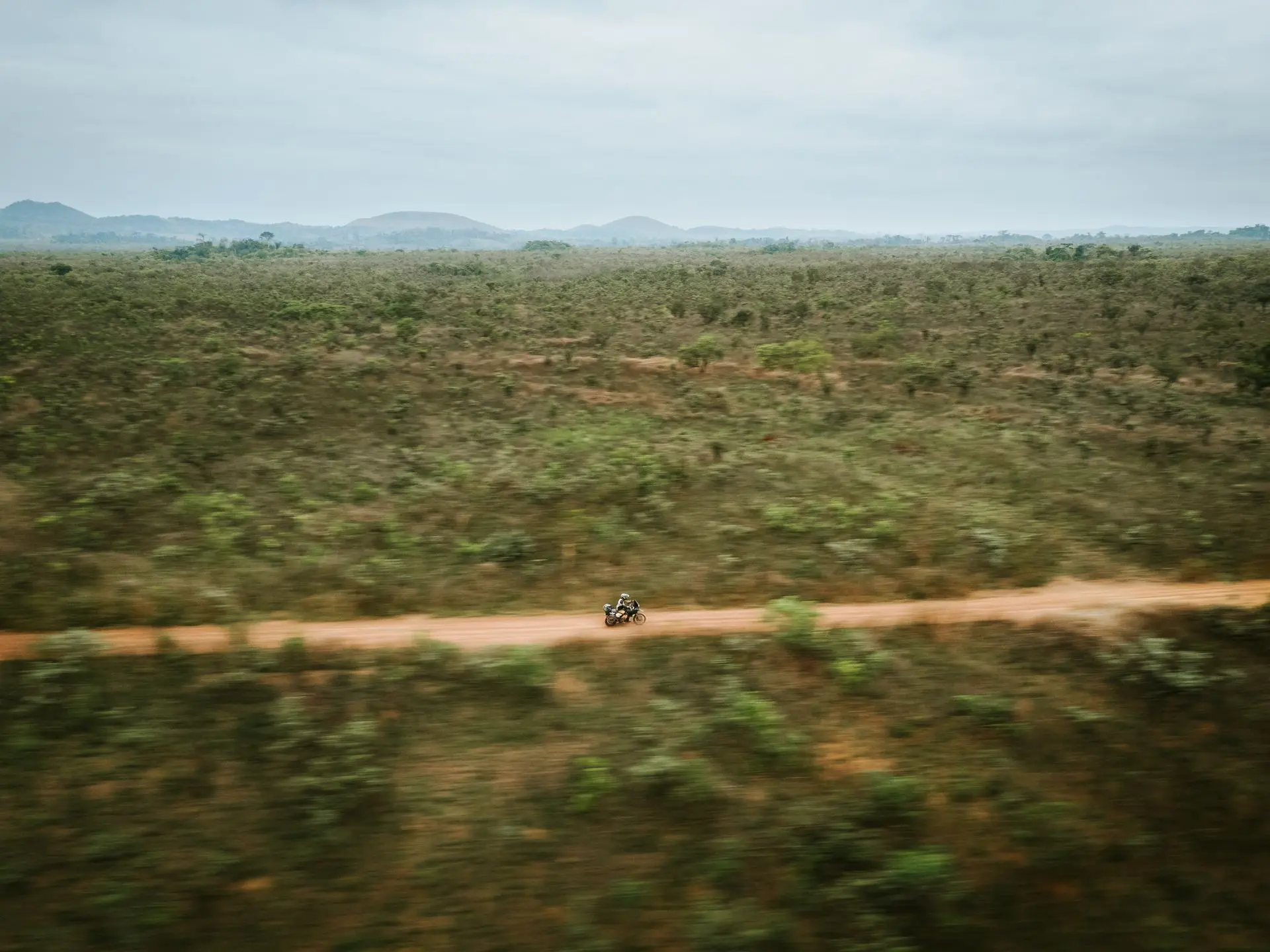
The plan was to ride from Ghana to Angola in 3 weeks. Then store the bikes in Luanda for couple of months after which Martins with an another rider will continue down to South Africa.
And after that… the plans are vague – either back up via the east coast of Africa or shipping to another continent.
AS:
Riding the bike through Africa seems like a big test of the bikes durability. It must be set up with all sorts of mods right?
Arvids:
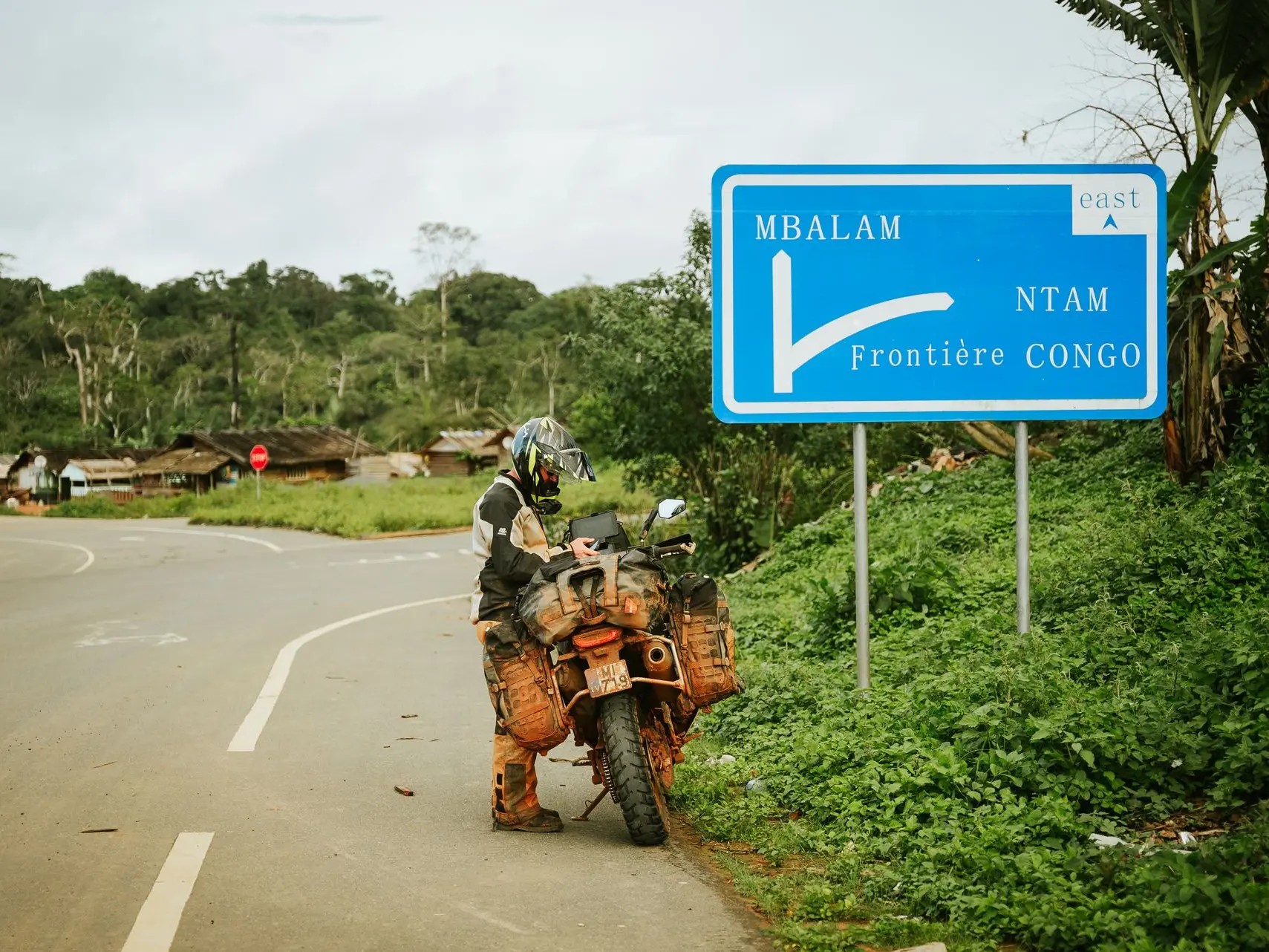
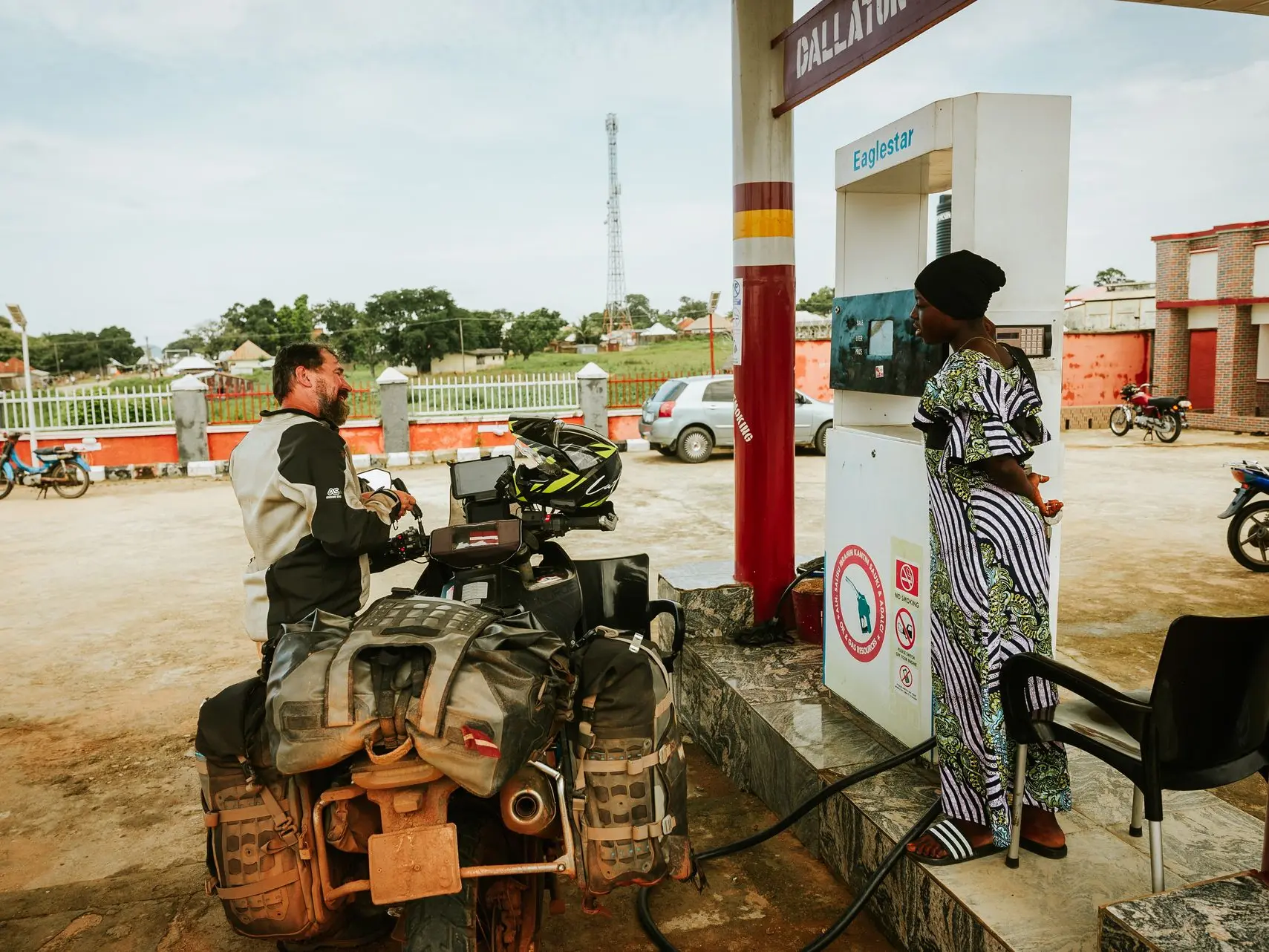
First of all the bikes were set up so that the riders could fly to them with only their helmet in the hand and be ready to go as soon as they land. Each bike had a the same Mosko luggage setup with a full Modern Nomad hammock set (hammock, tent, under-quilt), an ultralight one-person tent for emergencies (we really prefer hammocking!), a mat, a camping chair, everything for preparing and enjoying the meals, Samsung tabs for navigation, tools for fixing the bikes, the complete package.
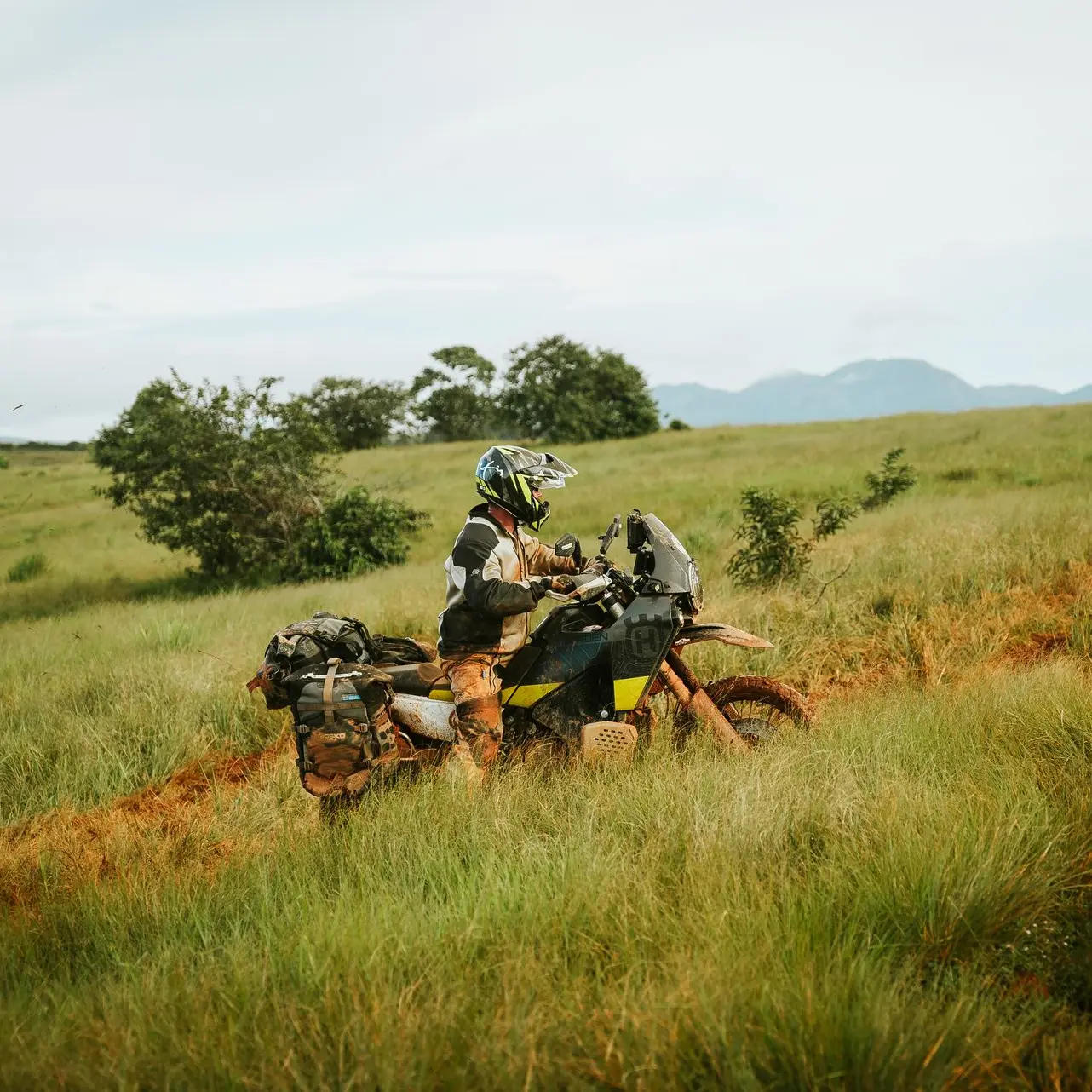
In terms of mods, there wasn’t much - these are stock Nordens who were bought before there was the Expedition variant. So the main upgrade was suspension as the basic edition of Nordens came with a subpar setup. Now these bikes sport WP Xplor suspension, high mud guard, Touratech hand guards, a heavy-duty bash plate and an Akrapovič exhaust complete the package.
Essentially the bikes are now as they should come from the factory. And they do and it’s called Norden Expedition. Some say that due to the low-hanging fuel tanks these bikes don’t need crash bars and our bikes don’t either. African terrain however might object to that. The heavily scratched, cracked plastics and dented radiators on our bikes serve as a proof.
Back at home I’m a Tenere 700 rider any day of the week. I’m a big fan of simplicity and peace of mind when it comes to ADV bikes. So for me this was a trip to the dark (orange, grey, green?) side. Did I enjoy the more powerful engine, better suspension and comfier seat of Norden? Yes I did! Did the heat from the engine, fiddling with electronics drive me mad? Were the potential KTM-esque issues fogging my mind? Double yes! Especially the traction control, that I couldn’t keep switched off when the riding got tough, because apparently I don’t have the right software upgrade. What gives?
There were technical issues such as overheating (fixed with adding coolant), seized rear brake (fixed with a tire iron), broken turn signal switchgear (learned to live without), but I write these off as an usual adventure travel mishaps that could happen to any bike riding in these tough conditions.
Don’t get me wrong – these are awesome bikes to ride, but if I had choice for an RTW machine, I’d still choose a Tenere. And for the difference in the cost of the bikes, I could build one bad ass Tenere!
AS:
You went to so many Africa countries in a really short space of time. I have a fun (and perhaps impossible) challenge for you. Can you sum up each country in a sentence?
Arvids:
Challenge accepted!
Ghana: it might be a culture shock for the uninitiated, but it is as simple, organized, friendly and safe as it gets in these parts of the world.
Togo: a 1st time camping amidst a true - hot, humid, lush, green - rainforest jungle and you might as well call yourself a Mowgli.
Benin: voodoo might feel like something from fictional stories, but it’s very much alive and practiced here and then there’s the Venice of Africa.
Nigeria: we have a theory that when you’re a 220 million strong country, there’s not enough work for everyone, so all there remains is to make pointless checkpoints every kilometer and nobody has heard of diesel particulate filters.
Cameroon: the Chinese are printing highways straight through the jungle that seemingly don’t connect anything to anything just yet.
Congo: paying 3 euros per liter of gas from a rum bottle, because apparently there’s a fuel crisis, is a new low (high?) for us.
DRC: were wary of it, were warned against crossing it overland, but the stars and the good people of a local motorcycling club aligned in our favour and made the experience one of the smoothest in the whole trip.
Angola: feels like emerging from three-week long dive and taking your first fresh breath of air since Ghana.
AS:
OK, now I'm going to be kind, pick two and flesh that sentence out.
Arvids:
Let’s talk about two completely different experiences.
Benin
I like activities off the bike, especially on trips that last longer than a week. I believe it’s essential to keep yourself sane and still enjoy the long ride.
One of those activities on this trip was visiting the lake village Ganvie in Benin. We found a guy on iOverlander who spoke excellent English (Benin is French speaking), accommodated safe parking for our bikes (always a thing to think about) and took us on his wooden boat on a private tour of the village that’s accessible only by water and is home to 20,000 people living in houses build on stilts.
Originally the village was created by the Tofinu people who took refuge from slave traders on the lake. Now it’s a fully functioning mini-state with schools, shops, churches.
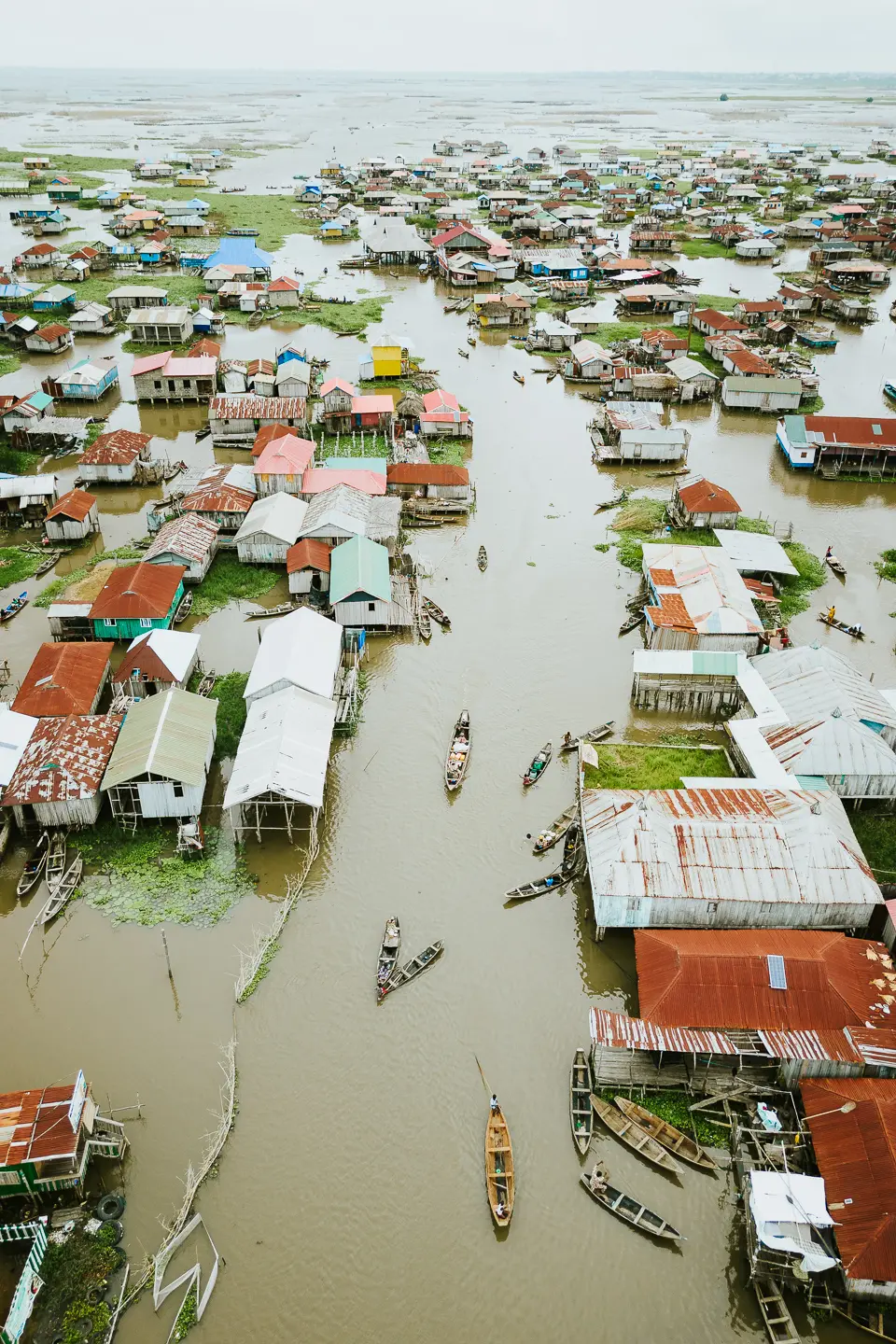
No streets though, hence children here learn to swim first and only then walk and the only means of transportation here are boats. It is the largest such village in Africa and is often called the “Venice of Africa”. Righty so.
Crossing from Nigeria to Cameroon
The second experience was very much on the bike, which did however include lots of next-to and under the bike action too. You see, more often than not Sub-Saharan countries don’t share well developed border crossings between them. For political or economic reasons they’re just not well connected. Look for yourself on Google Maps and you’ll see what I mean.
If you want to cross from Nigeria to Cameroon you have the following options - go on a small boat via the ocean, risk kidnapping and unstable separatist action on Cameroon side anywhere from the sea up to about 500km inland, take and off-road path in the middle parts, ride 1000+km detour looking for a better road across, but don’t ride too much north as you’ll end up in Boko Haram - an Islamist jihadist organization - region.
Excellent.
With a bit back and forth we voted for the off-road track, the reviews of which on iOverlander did strongly advise not doing it in the wet. It was pouring. Long story short - we made only 70km progress in one day.
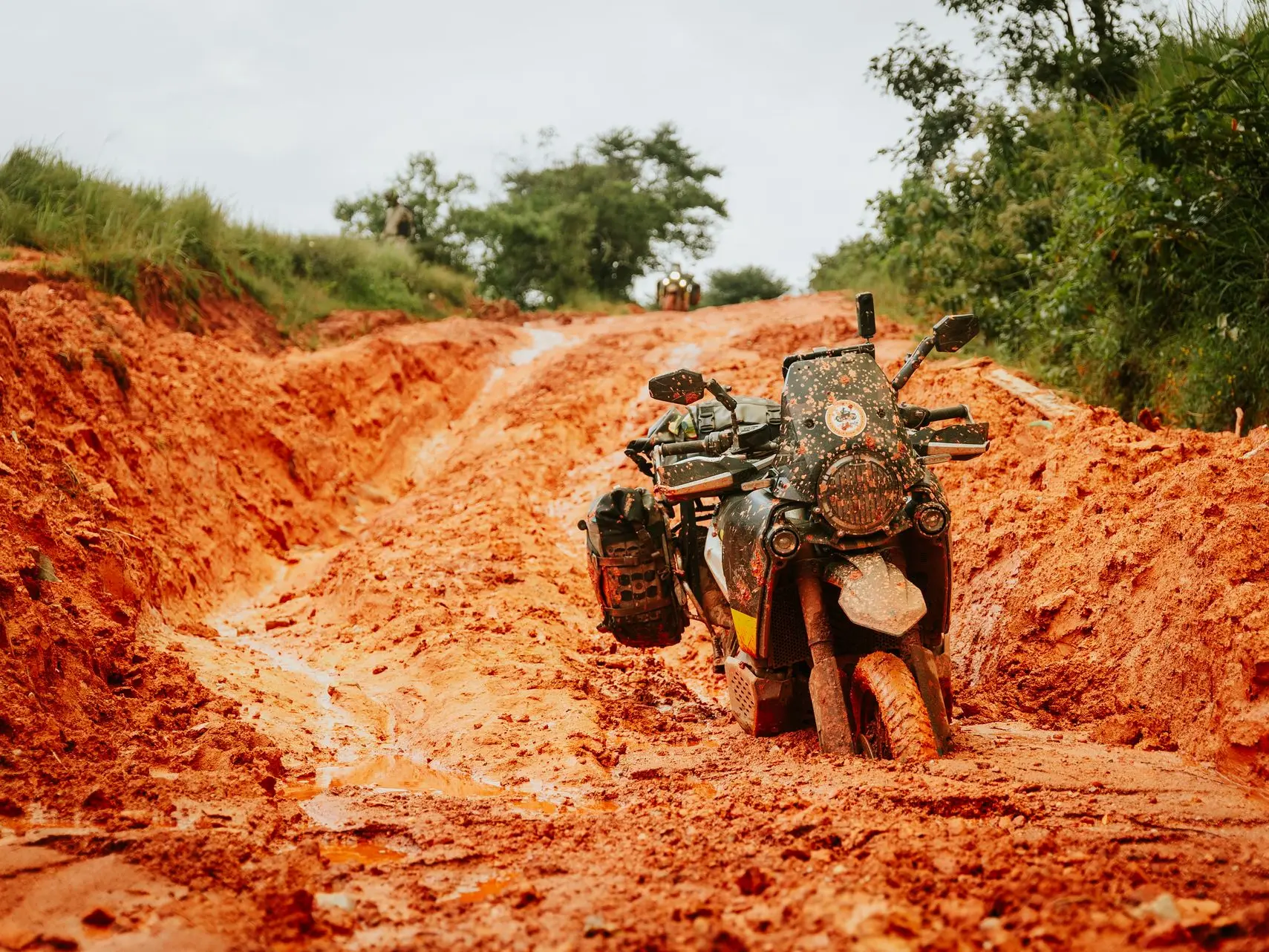
It was a mix of the most slippery type of mud and the most deep type of mud. I stopped counting the times we crashed.
At one point there were us and two local men digging out my Norden from knee deep orange mud hole. Each individual case of stuck might not have been that bad, but given the sheer continuous amount of stuck, this was the hardest off-roading we’ve ever done. Even for Martins, who has been places.
As remote as this track was, there was still some local traffic. All I could do is wonder how did the big heavy trucks end up here. Though we never saw a driving one. Only stuck ones. As far as I’m concerned they might still be there digging themselves out. And it’s been months.
AS:
You took so many photos, it's been an absolute joy looking through them, you are a skilled story teller with the camera. I've picked out a few that stood out to me. Can you tell a little of the story behind each of these?
Arvids:
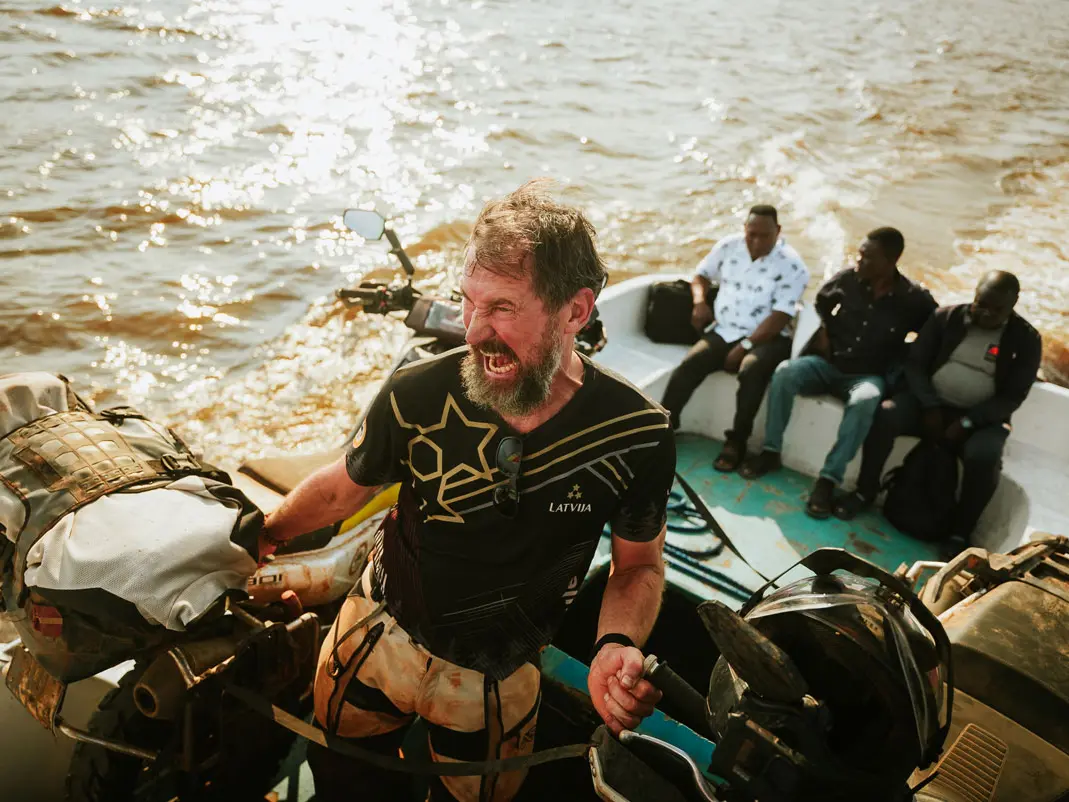
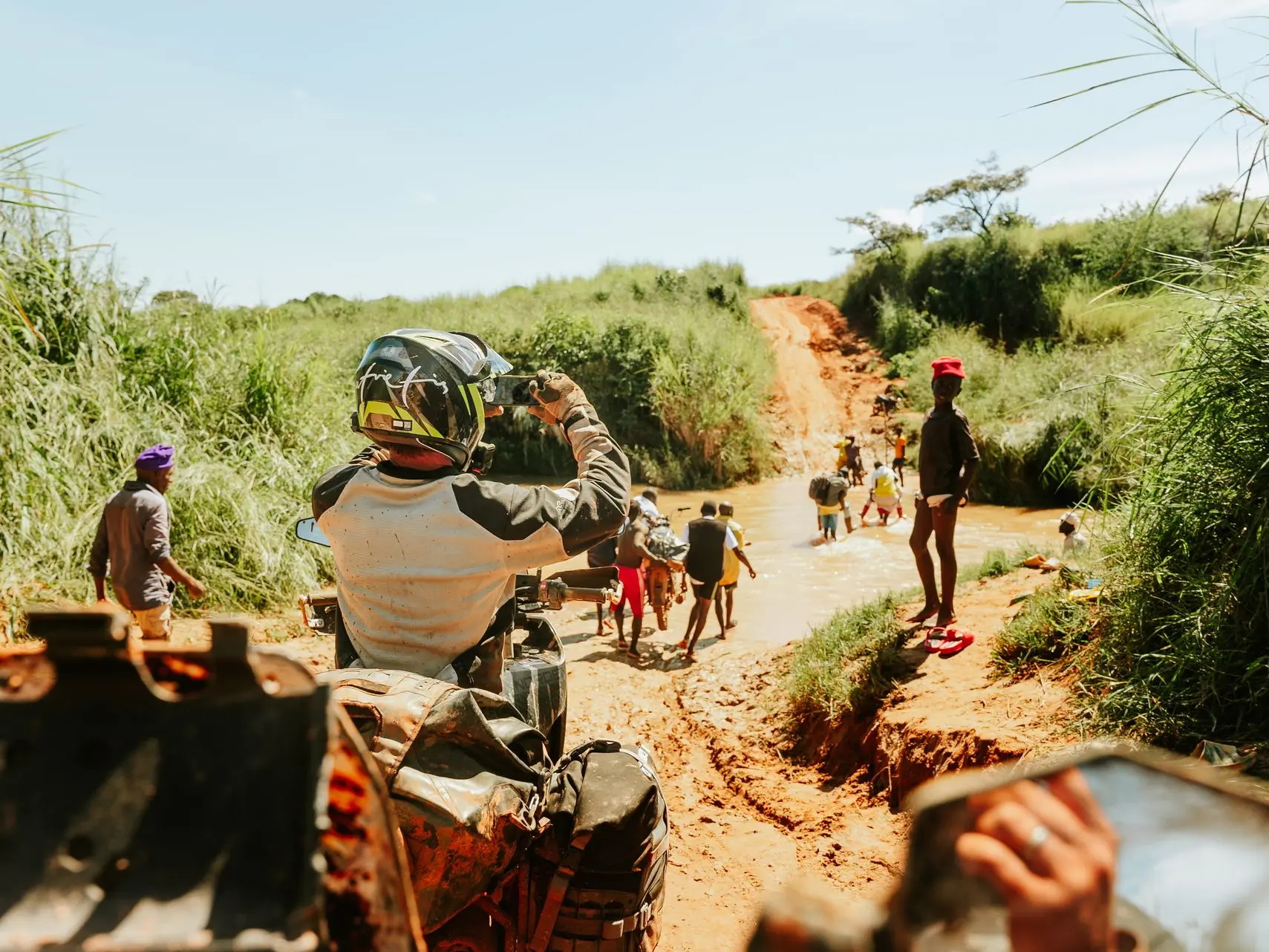
Crossing Congo river.jpg - Martins holding the bikes so they don’t fall into the mighty Congo river as we’re finding ourselves in the very unlikely event of actually making the crossing from Congo to DRC on a boat.
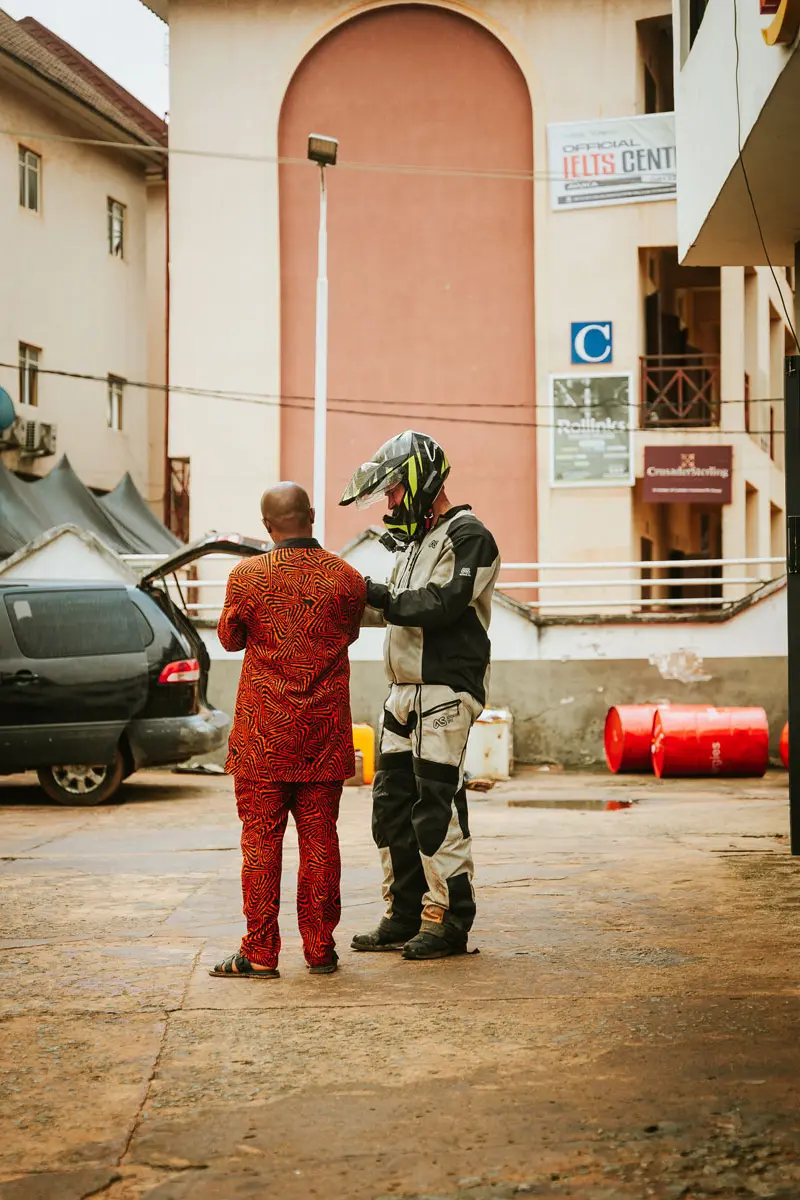
Colors.jpg - getting directions from a local gentleman. Life might be tough here, but people compensate it by dressing up vibrantly.
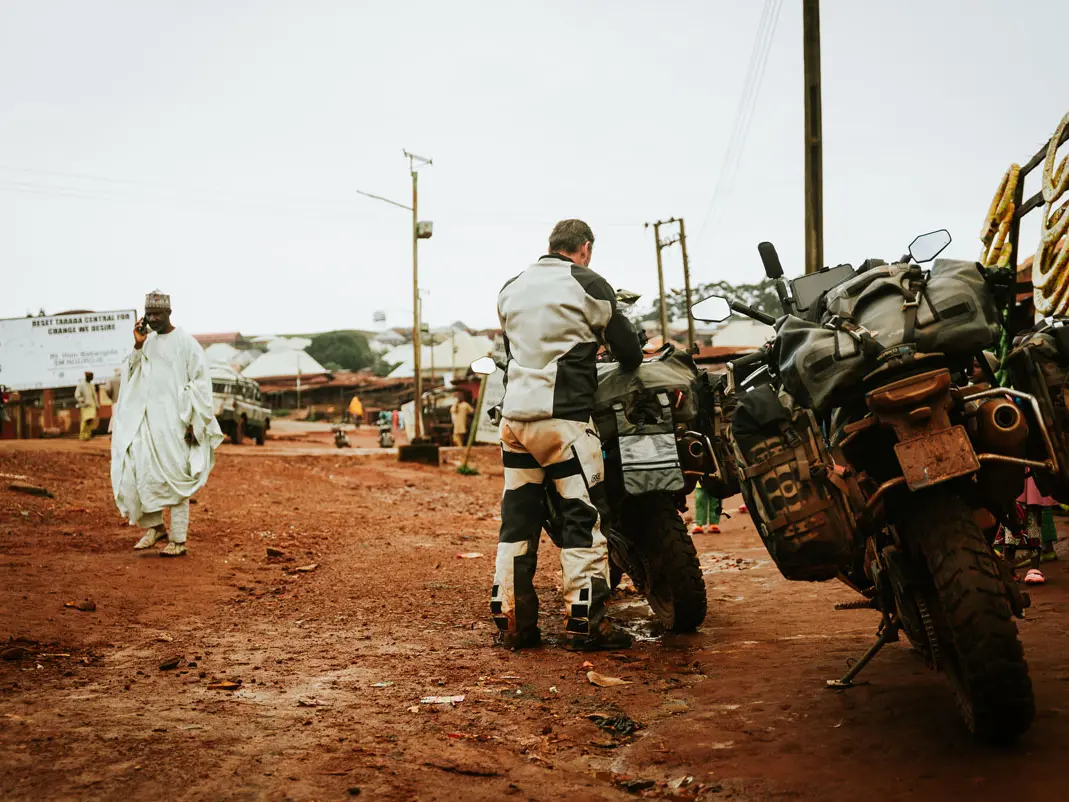
White.jpeg - how do people keep their clothes clean in these conditions still remains one of life’s great mysteries.
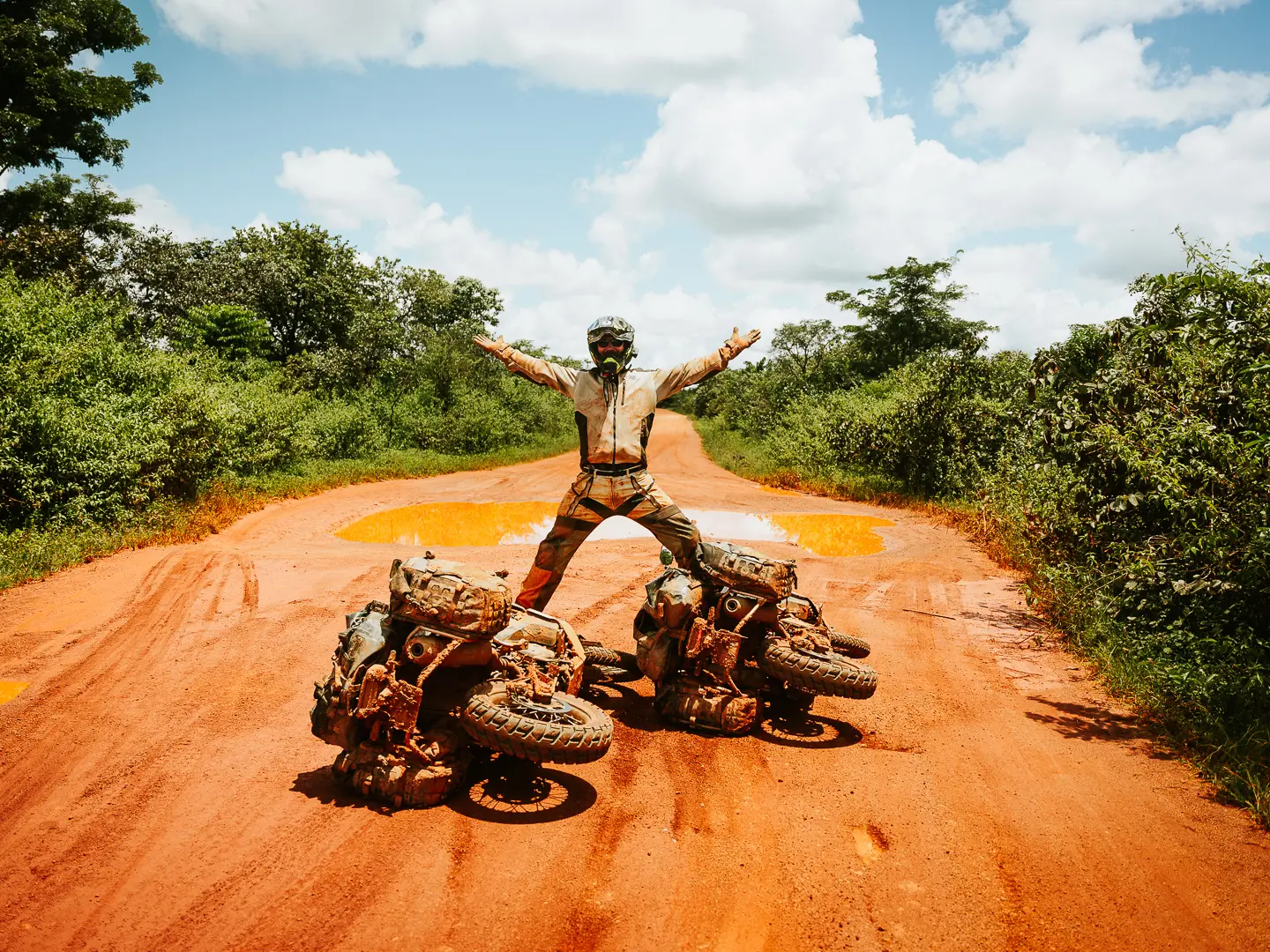
Crash.jpg - when the roads improve, you start to ride faster and pay less attention. And then you crash. While doing so we might have discovered a new olympic discipline - parallel crashing.
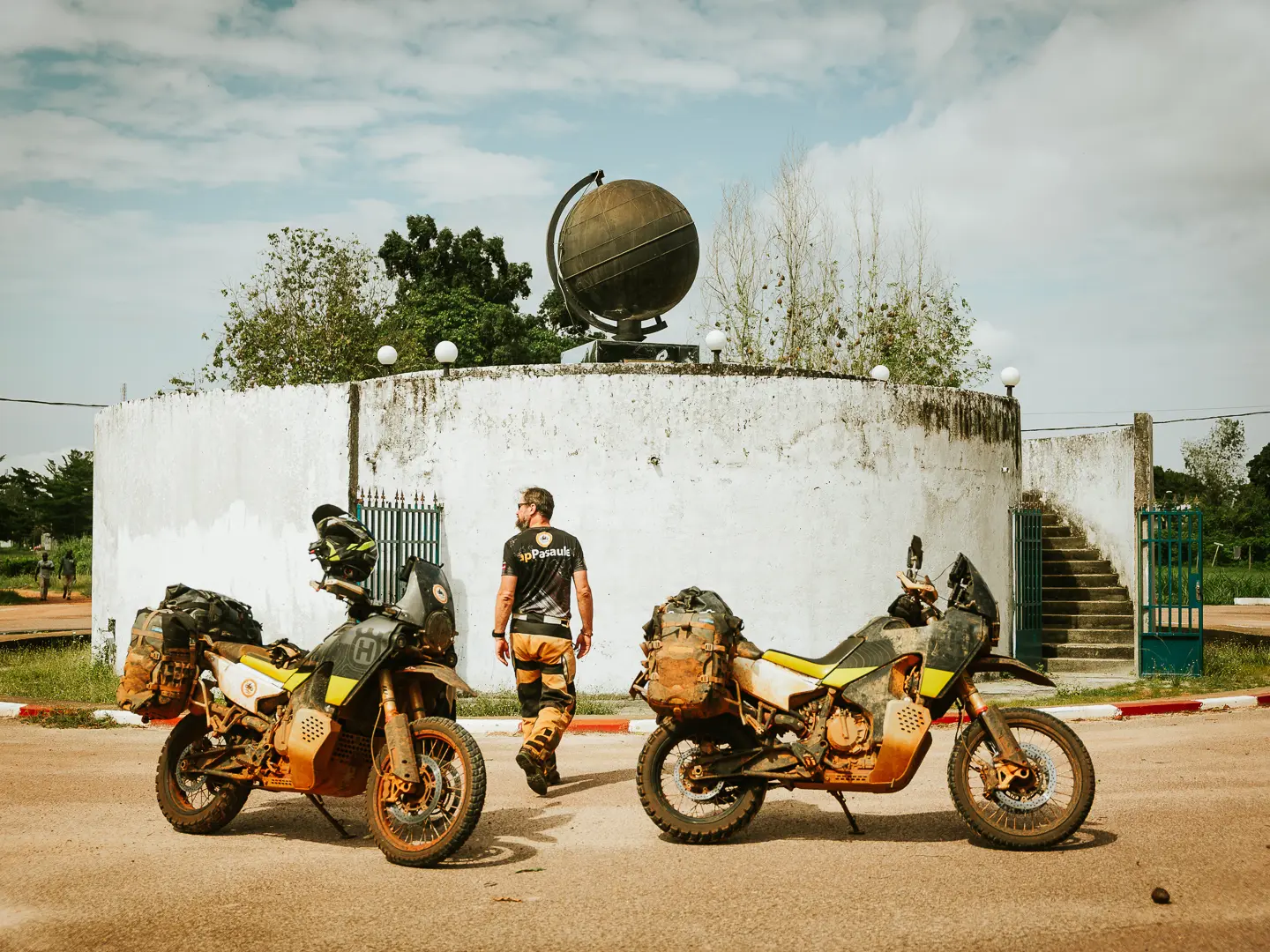
Crossing equator. A first for me.
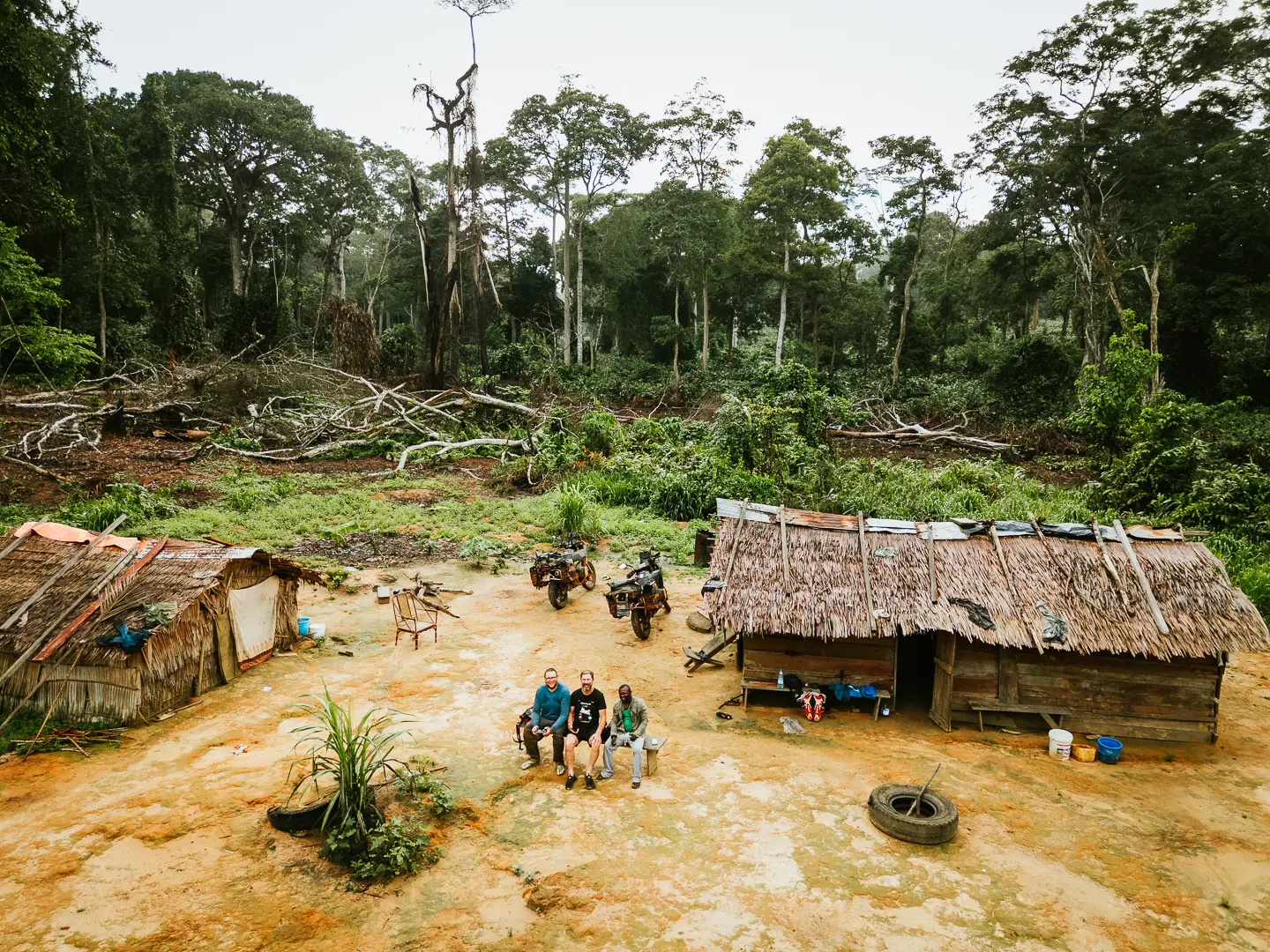
Hunter.jpg - spending a night in a Hunter’s shed in the Congo jungle. And then going to look for some gorillas. They were camera-shy, but we did see some.
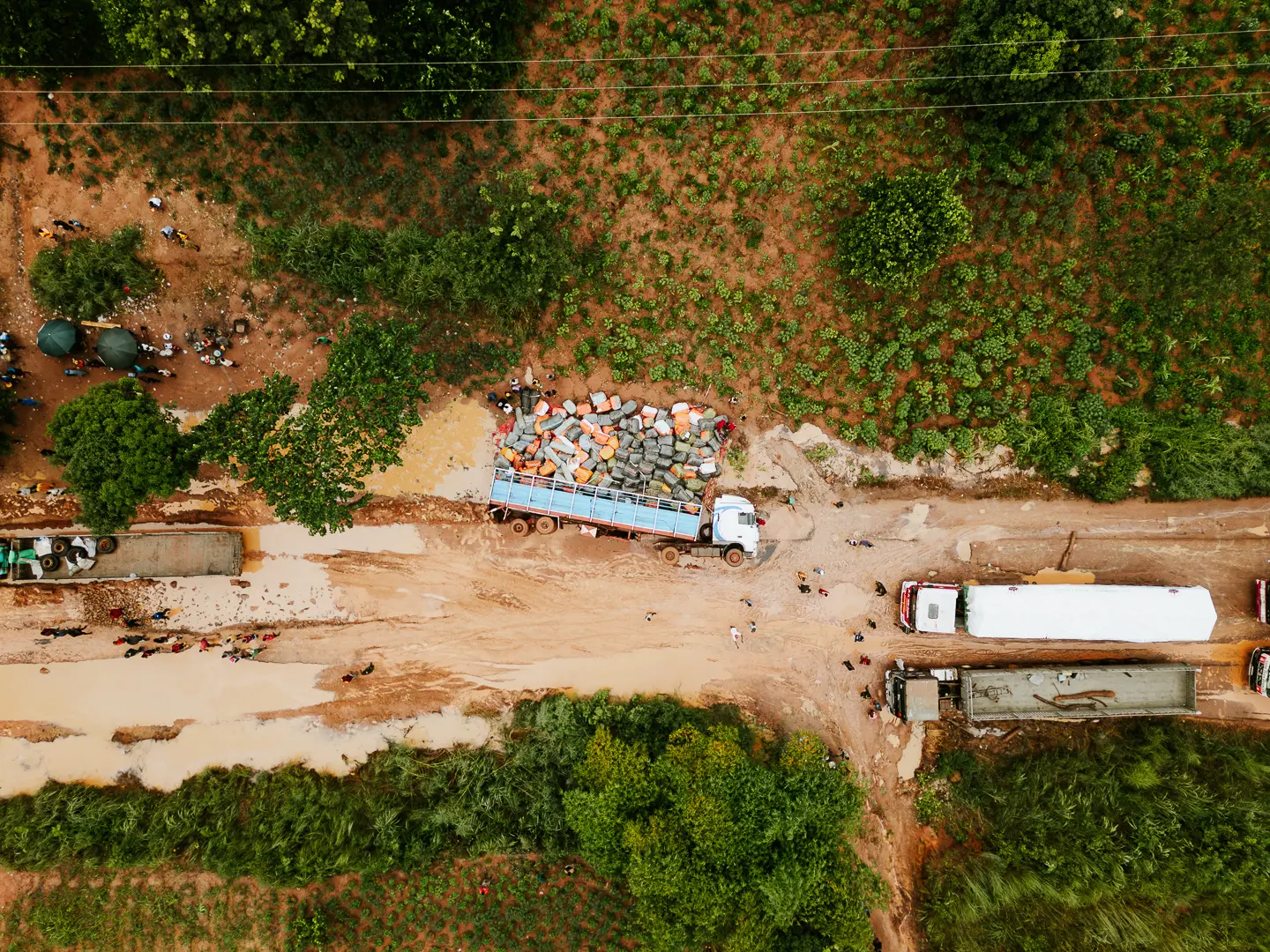
Trucks.jpg - this trip wins the prize for the most crashed trucks seen. Overloading and lack of road maintenance does that.
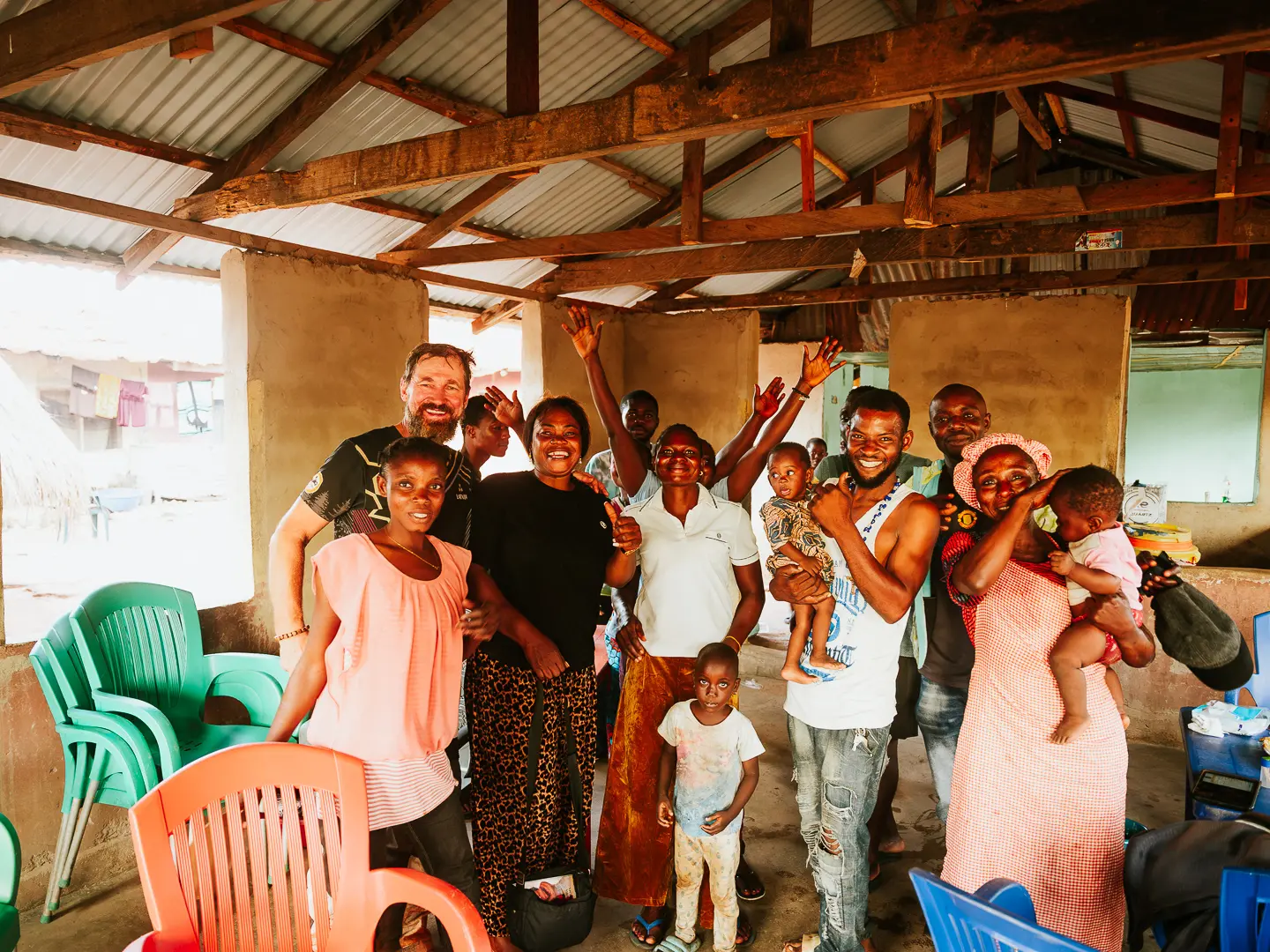
Family.jpg - we might have stopped for a quick bite, but ended up becoming a family.
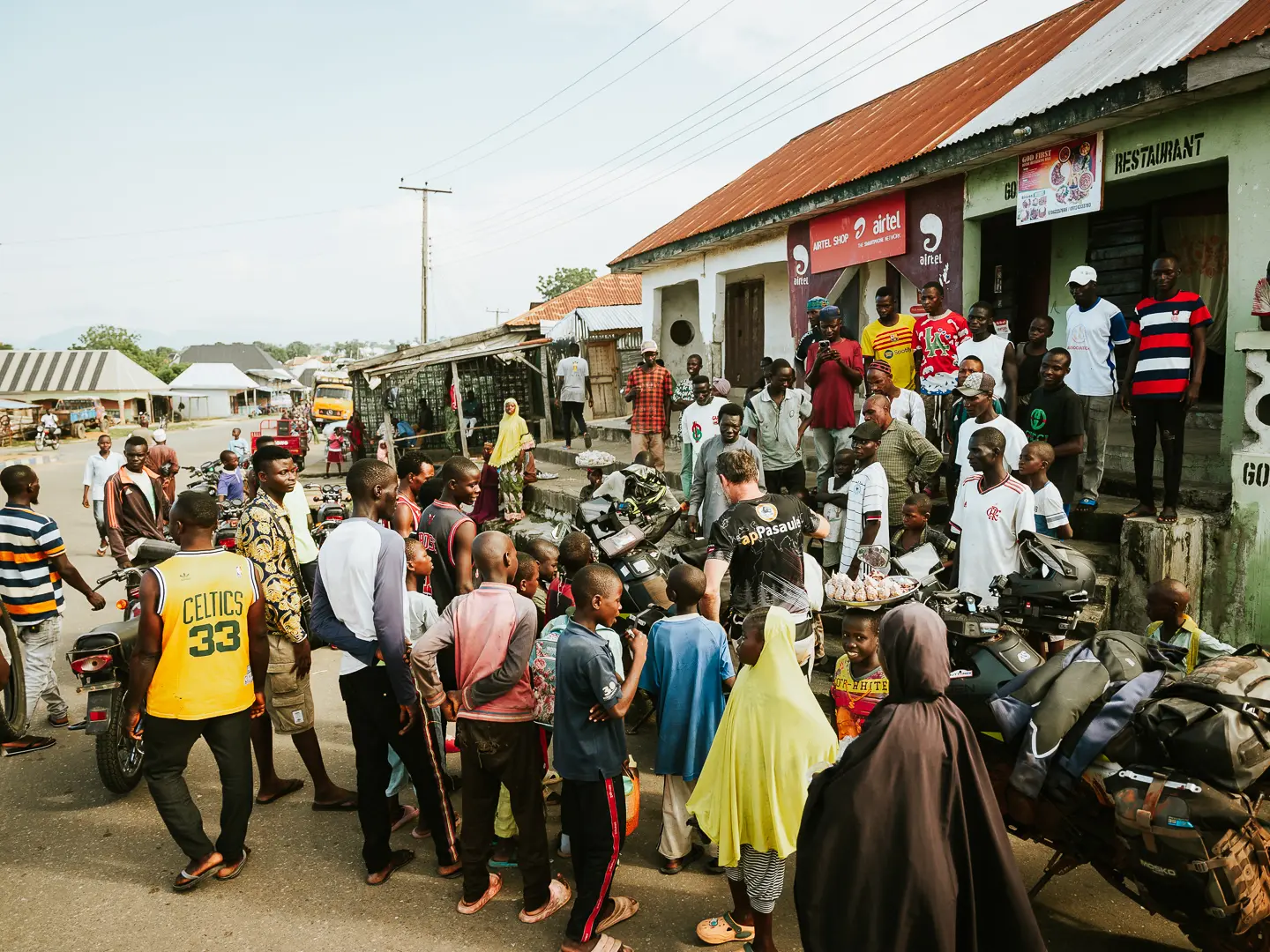
If you like being the centre of attention, Africa is for you. For 3 weeks straight we were the magnets
AS:
What camera gear did you use and how did you keep it mud free?
Arvids:
My objective was to make films of this trip, so I opted to take my Sony A7sIII with me, it’s just so good at filming and I cherish every moment I can use it instead of the usual GoPros, Insta360ies, phones and drones.
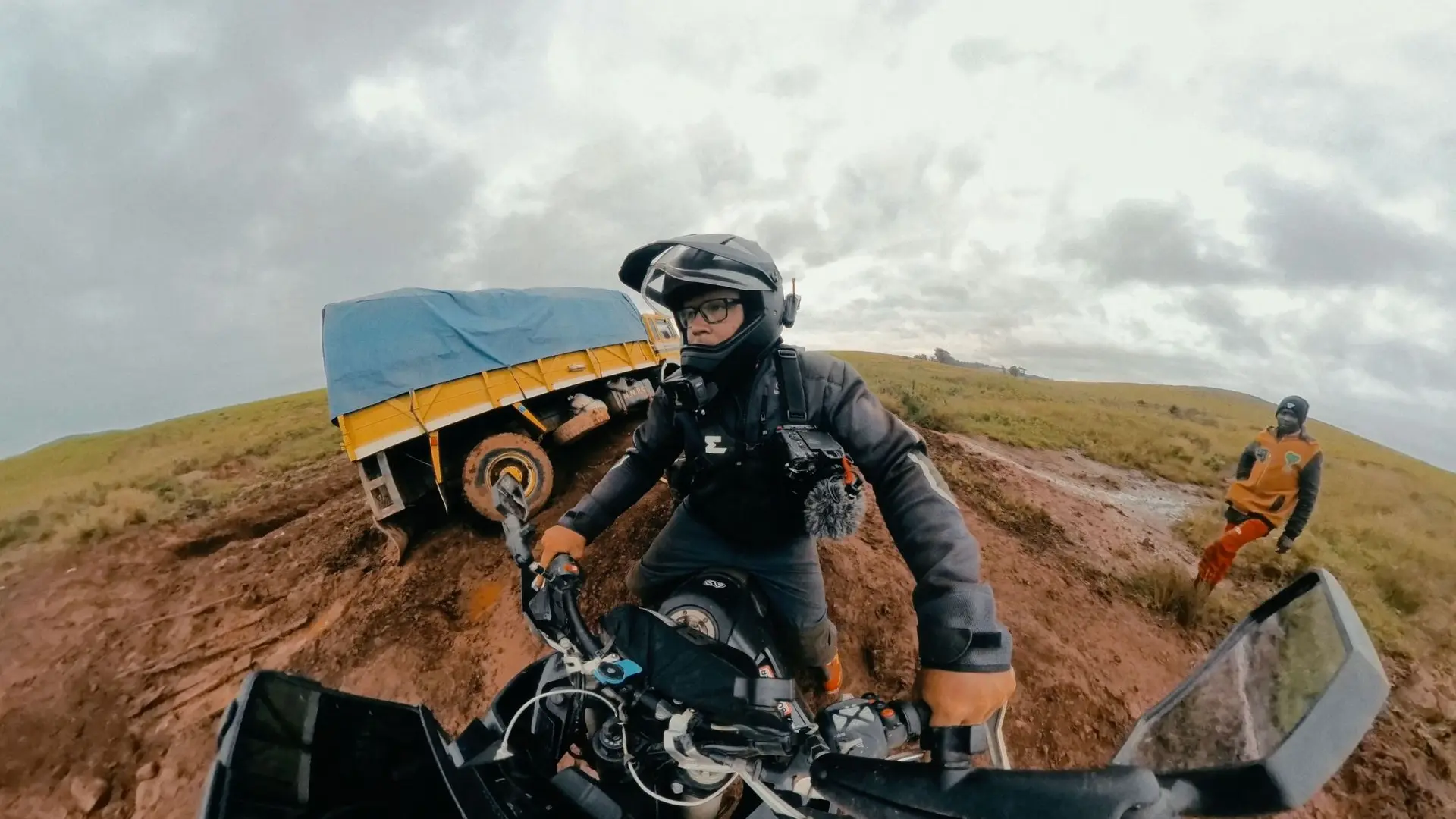
That did however mean it had to be at an arms length and clipped on my shoulder instead of carrying it in the bag and missing all the shots.
I know - a risky and potentially expensive gamble on my side. But hey - the voodoo spirits must have been kind and the gear survived.
Can’t say the same about the mud though. I’m still finding traces of it while using the Sony filming commercial stuff back at home. But hey - that’s a conversation starter too!
AS:
Finally, you and Martin's were wearing Adventure Spec gear. Can you give a bit of an overview of how it performed in the African climate?
Arvids:
Going into this trip we knew it would be hot and humid. So the down layers stayed at home.
I wore the original Mongolia jacket, Linesman Pant and AquaPac for when it started to pour, but only then, since a little rain was actually quite refreshing.
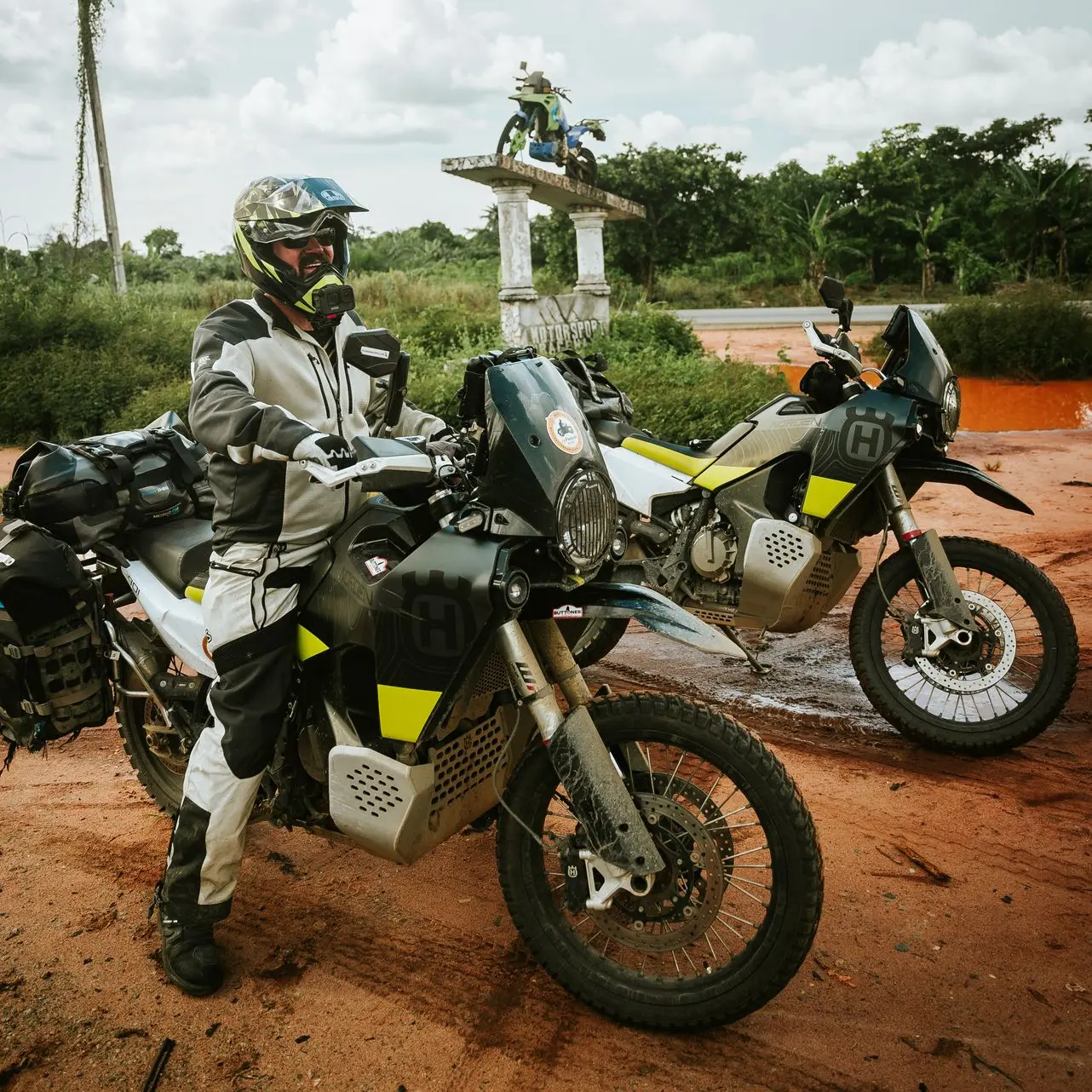
This was my 1st experience with a mesh jacket and I’m never going back in hot conditions. Previously in Morocco I wore a jacket with lots of openings, but it didn’t come close in terms of ventilation compared to the Mongolia.
I was warm, but never unbearably hot without the usual hot-spots since the whole jacket is breathing. The Mongolia pant in my size was out of stock, so I went with the Linesman Pant. It might not be mesh, but it felt like it was letting air through the whole length of the pant, so I wasn’t boiling down under either. Actually compared to riding in shorts, it was more pleasant.
That notoriously hot KTM engine worked against the African heat. The only problem I had - and I’ve had this with all my over-the-boot pants - I tore holes in the bottom parts by constantly hitting the sharp teeth of the foot pegs.
Martins wore the new Mongolia 2.0 gear top to bottom and a Singletrack Jacket for when it got really wet. The most obvious difference to the old Mongolia is colour and for me as a picture maker the white made for a great contrast with the African greens and browns.
I’m no physicist and can’t feel what Martins felt, but I believe bright colours cope with Sun better too. And Sun there was.
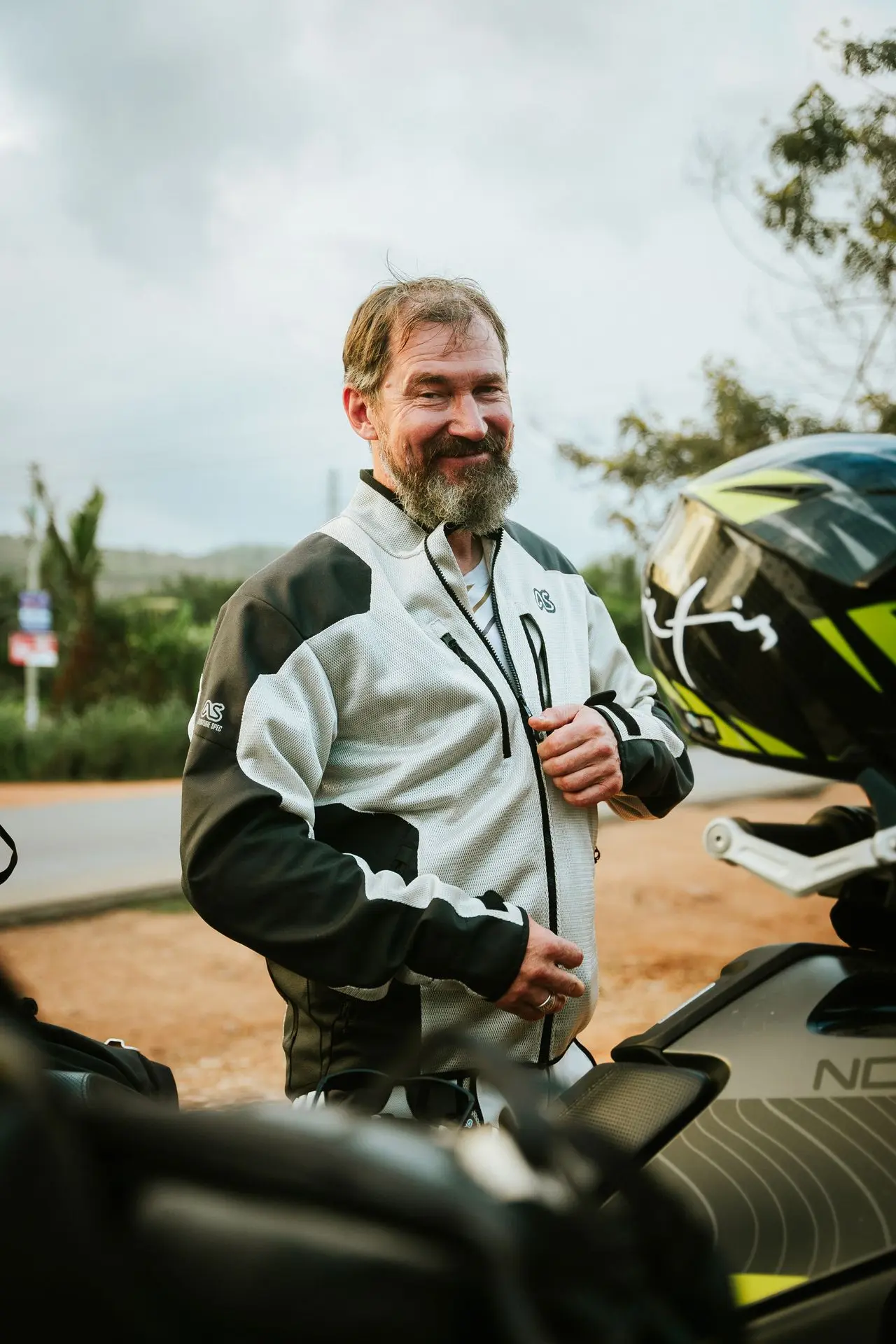
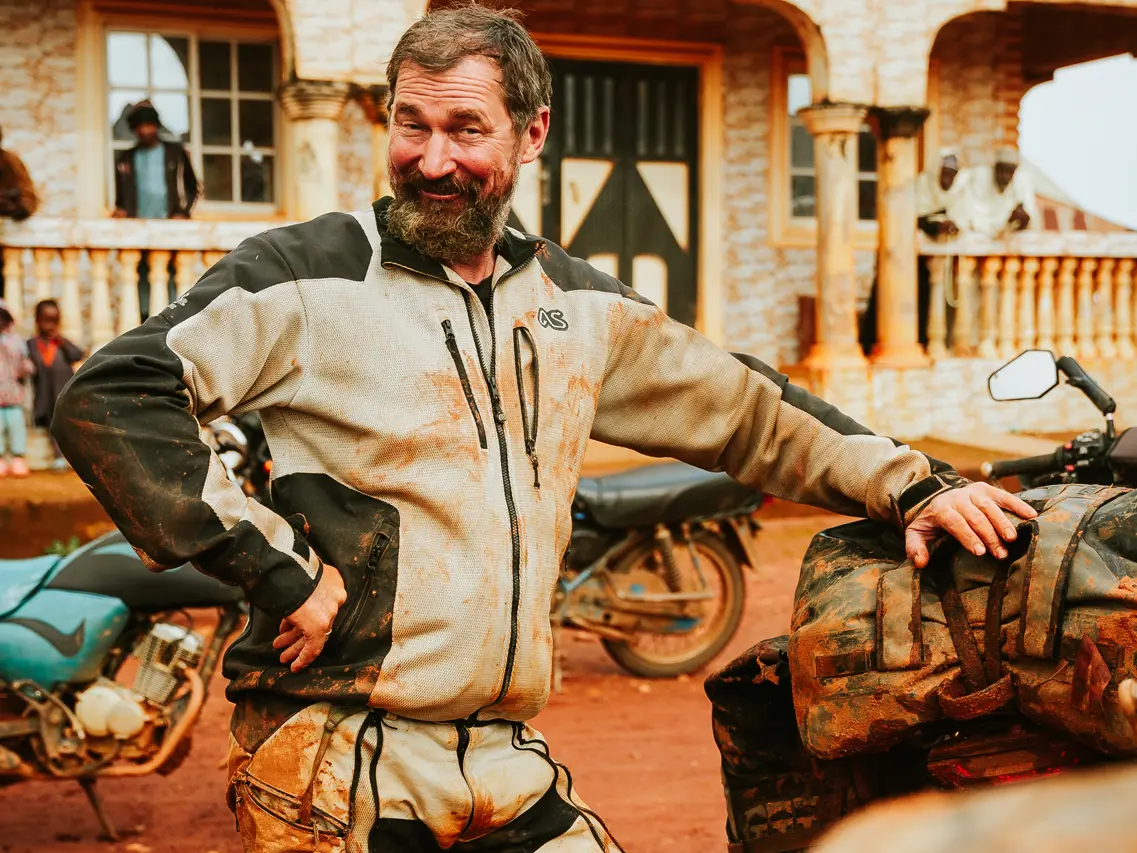
One has to note though that by the end of the trip Martin’s gear had taken on the colour of Africa and blended into the surroundings much more easily than at the beginning of the trip. You could almost tell the whole story by only snapping pictures of his garment.
A welcome addition were the pockets on the new jacket. I missed those on my old Mongolia especially on border crossings where you have to juggle keys, electronics (can’t leave those on the bike) and documents.
AS:
Last question - with such a big trip behind you, where next?
Arvids:
6 months ago I didn’t even dream about going to Africa. So much about me and planing well ahead. These trips just kinda happen spontaneously for me. I might not survive the winter without riding a bike, so there has been some talk about a fly&ride to Sri Lanka with my wife. She’s also getting the new CFMOTO 450 MT next spring, so we will have to make a trip with that too, have some unfinished business in Norway.
And then there’s the itch to ride TET Turkey too. But I’m not betting that I’ll not end up in South America instead.
Wherever the wind will blow I’ll make sure to reserve enough time to both gathering and telling the stories. The telling part actually currently excites me even more. Hence by dab at the whole YouTube thing.
You can see more of Arvids photos on his website here [
] and I especially recommend spending an evening with his films here [
There's also a podcast where he goes into even more detail about his trip here.
This story was first published in our email Newsletter. Subscribe now for the most ADV email you will get all week!